 If you’re thinking about joining a multi-day snowshoeing trip, you may be wondering which destination suits you best.
The Jura Vaudois, Bernese Oberland and Italian Alps are all wonderful places to explore on snowshoes, but they offer three quite different experiences.
The Jura is peaceful, relatively gentle and wonderfully uncomplicated. The Bernese Oberland offers bigger mountains, longer days and more physical challenge, balanced by comfortable hotels. Italy combines a real alpine adventure with Italian food, hospitality and some well-earned relaxation.
So which one should you choose? The answer depends less on your previous snowshoeing experience than you might think – and more on your fitness, the level of comfort you enjoy and the kind of winter adventure you’re looking for.
The Jura Vaudois: the gentlest introduction to a multi-day snowshoe trip
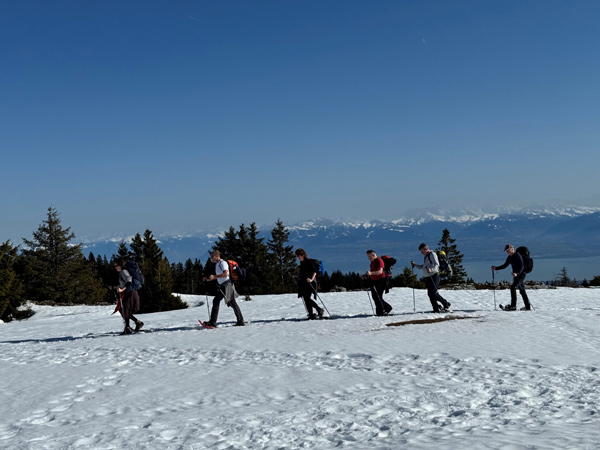
If you’ve never been snowshoeing before and are wondering whether a multi-day trip might be too ambitious, the Jura is a very good place to start.
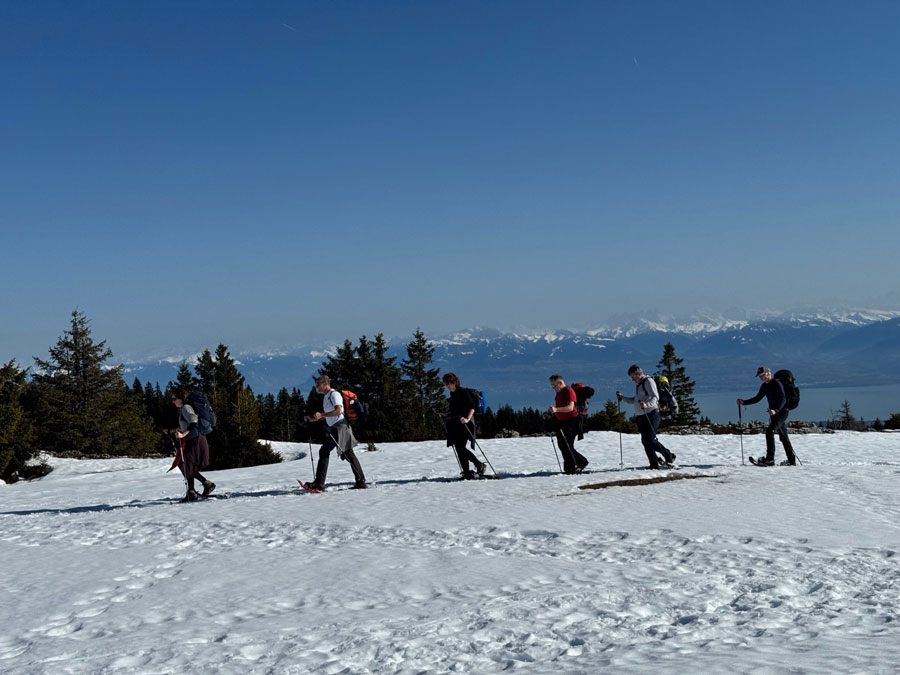
The Jura Mountains are lower and generally less steep than the high Alps. The landscape is completely different too: rolling white ridges, open pastures and beautiful forests rather than towering alpine peaks. It feels quiet, spacious and far removed from busy ski resorts.
The experience is deliberately simple and rustic. You carry your own belongings and stay in shared mountain accommodation. A room upgrade may be possible, subject to availability.
Previous snowshoeing experience isn’t required. If you enjoy walking and have a reasonable level of fitness, the Jura is an excellent first multi-day snowshoe adventure.
Choose the Jura if you are new to snowshoeing, enjoy quiet nature and forests, don’t need luxury and like the idea of a simple winter adventure.
The Bernese Oberland: more challenge, more comfort
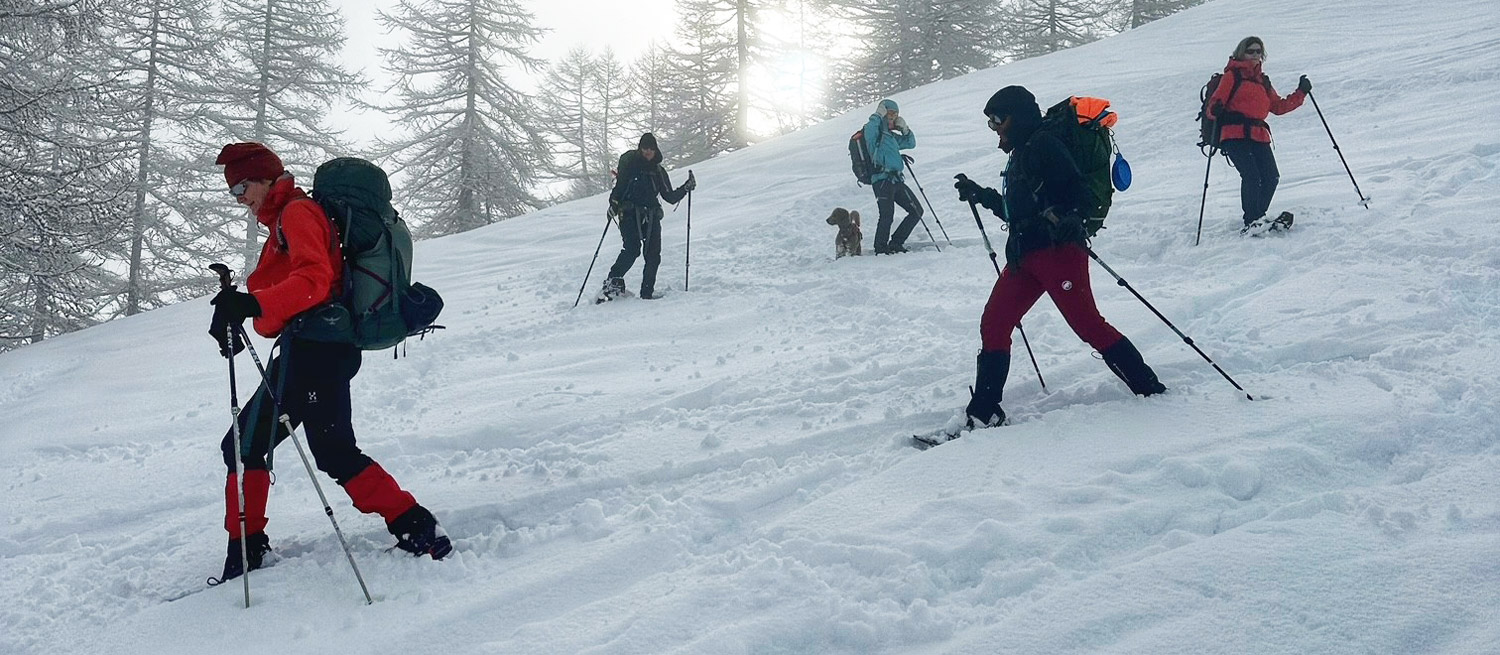
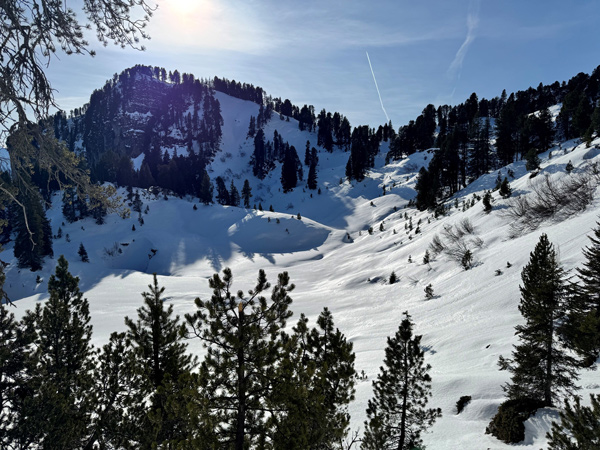
The Bernese Oberland is a different proposition. Here the landscape becomes unmistakably alpine. The mountains are bigger, the terrain more demanding and the days require more stamina.
The reward is spectacular winter scenery and views towards some of Switzerland’s most famous peaks, including the Eiger, Mönch and Jungfrau. The trip combines that bigger mountain experience with comfortable hotels.
You don’t necessarily need previous snowshoeing experience, but there is an important distinction: if this is your first time on snowshoes, you should have a very good level of fitness and be comfortable with several consecutive days in the mountains.
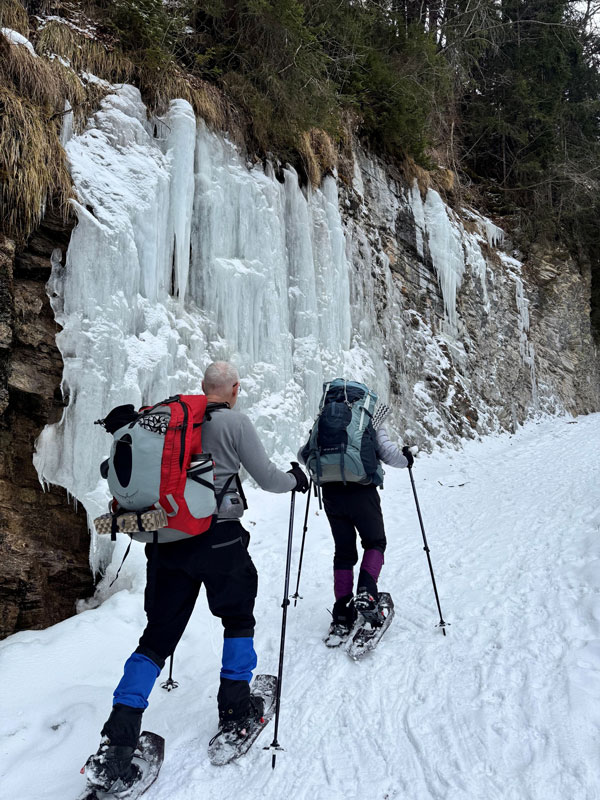
Everyone carries their own personal belongings, so packing light is important. For strong hikers, the Bernese Oberland is a wonderful way to experience the Alps in winter without sacrificing comfort at the end of the day.
Choose the Bernese Oberland if you have good to very good fitness, want the biggest physical challenge of these three trips and love the combination of serious mountain days and comfortable hotels.
The Italian Alps: mountain adventure meets Italian hospitality
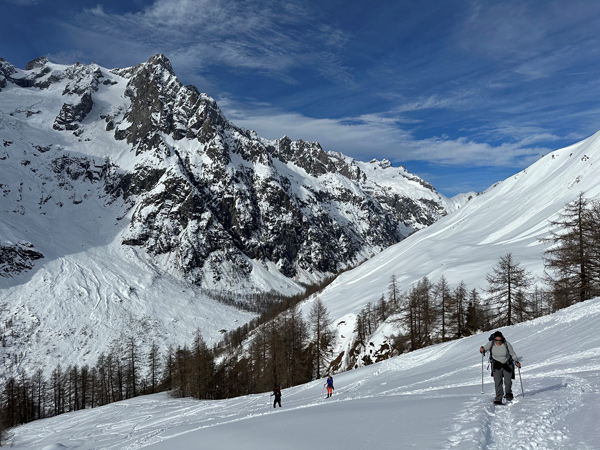
Our Italian trip combines alpine snowshoeing with the warmth and hospitality that make Italy such a pleasure to travel through.
The terrain feels more alpine than the Jura, but previous snowshoeing experience is not required. With a reasonable level of fitness, it can be a very good first multi-day snowshoeing trip.
For many guests, the appeal is the contrast: proper winter mountain days outside, followed by good food, warmth and relaxation. It feels adventurous without needing to become an endurance exercise.
Choose Italy if you want a genuine alpine experience, have reasonable fitness and like your adventure balanced with Italian hospitality and some comfort.
Do I need previous snowshoeing experience?
For all three trips, the answer can be no. Snowshoeing is surprisingly easy to learn. If you can hike, you will usually become comfortable with the basic technique quite quickly.
What differs is the physical demand. Broadly speaking, the Jura is the most accessible, the Italian Alps sit in the middle, and the Bernese Oberland is the most demanding.
That doesn’t mean the Jura is boring for experienced hikers, or that a beginner cannot do the Bernese Oberland. Fitness, mountain experience and confidence matter too. If you are unsure, contact us before booking. We would much rather help you choose the right trip than put you on one that doesn’t suit you.
What about avalanche safety?
Avalanche safety equipment is required on our Bernese Oberland and Italian Alps trips. Everyone carries a transceiver, shovel and probe. Equipment can be rented through us, and your International Mountain Leader will explain how to use it before heading into the mountains.
For the Jura trip, avalanche equipment is not normally required.
Route choice is never based simply on where we would most like to go. Your Mountain Leader assesses the current avalanche bulletin, snow and weather conditions, terrain and the group. If conditions aren’t appropriate, we change the plan. That flexibility is part of responsible winter mountain travel.
Do I carry my own luggage?
Yes. There are no luggage transfers on our winter trips. Everyone carries their own personal belongings.
Don’t let that put you off. For a short winter trip you need much less than you might imagine, and you’ll receive a detailed packing list beforehand.
Which trip should I choose?
If your priority is a gentle introduction, simplicity and quiet winter nature, choose the Jura Vaudois.
If you want the greatest physical challenge combined with dramatic mountain scenery and comfortable hotels, choose the Bernese Oberland.
If you’d like an alpine adventure that combines snowshoeing with Italian hospitality and relaxation, choose the Italian Alps.
There isn’t a ‘best’ trip. There is a trip that fits you best. If you’re still not sure, tell us about your hiking experience, fitness and what you’d like to get out of the trip, and we’ll help you choose.